If you have gout, few things trigger an attack as reliably as a big night of drinking. Alcohol has a well-earned reputation as a gout trigger — but there’s a lot of confusion about which drinks are worst and whether “just a glass of wine” is safe. The research has answers, and some of them will change how you think about that after-work drink. Here’s what alcohol actually does to gout, and how to enjoy a social life without paying for it in your big toe.
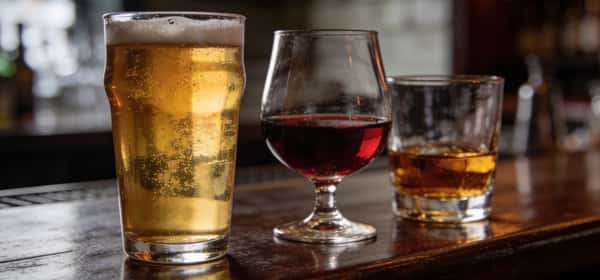
Quick answer: Alcohol triggers gout by raising uric acid and dehydrating you, and the evidence is clear that all types — beer, liquor, and wine — increase the risk of a recurrent gout attack in a dose-dependent way, even at moderate amounts.1 Beer is the worst because it adds purines on top of the alcohol.2 There’s no truly “safe” alcoholic drink for gout, but if you drink, less is better, wine in small amounts is likely the least risky, and cutting alcohol entirely during a flare is important. Staying well hydrated helps offset the effect.
Why alcohol triggers gout
Alcohol works against you in a few ways at once:
Choose your goal and get a meal plan that considers your joints.
Powered by DietGenie Eat healthy
 Lose weight
 Gain muscles
 Explore new cuisines
- It raises uric acid. Alcohol increases the production of uric acid and interferes with your kidneys’ ability to clear it, so levels rise.
- It dehydrates you. Alcohol is a diuretic, and dehydration concentrates uric acid and is itself a known attack trigger.
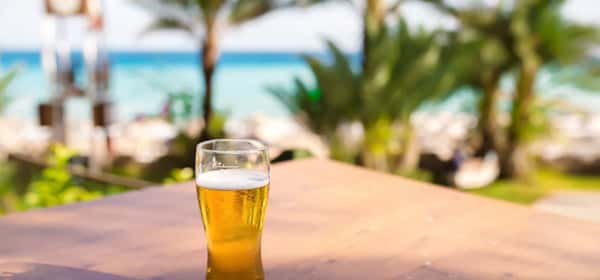
- Beer brings purines. Beer contains purines (from the brewer’s yeast), so it delivers a double hit — alcohol plus the raw material for uric acid.
Put together, that’s why a heavy drinking session so often precedes an attack a day or two later — the classic pattern of a big weekend followed by a flare early in the week. It’s also why alcohol is one of the most consistently reported triggers among people who track what sets off their own attacks. For the wider list of dietary triggers, see foods to avoid with gout.
Which drinks are worst?
Here’s the ranking the evidence supports, from most to least risky:
| Drink | Risk level | Why |
|---|---|---|
| Beer | Highest | Alcohol plus purines |
| Liquor/spirits | High | Alcohol raises uric acid |
| Wine | Lower, but not zero | Raises risk at higher amounts |
For years, wine was thought to be safe for gout — but that turns out to be a myth. A detailed study found that consuming wine, beer, or liquor all raised the risk of a recurrent gout attack, and the risk rose with the amount consumed.1 So while wine in small quantities is probably the least troublesome choice, it’s not a free pass. Beer remains the clear worst option because of its purine content, a finding backed by long-term research linking beer intake to gout.2
How much is too much?
Less than you might hope. The research found a dose-response relationship: even one to two drinks in a 24-hour period was associated with a higher risk of an attack, and the risk climbed further with more.1 There’s no established “completely safe” amount for someone with gout — the more you drink, and the more often, the greater the risk.
That doesn’t mean total lifelong abstinence is the only option for everyone, but it does mean moderation needs to be genuine: occasional, small amounts rather than regular or heavy drinking, and an honest awareness that each drink nudges your risk up. It’s also worth knowing your own pattern — many people with gout find that a specific drink or a specific amount reliably precedes their attacks, and once you spot that link, it’s much easier to make the call to skip it.
What to do about it
A practical approach that doesn’t require becoming a hermit:
- Cut back overall. Fewer drinks, less often, is the single biggest lever. If beer is your usual, switching to the occasional small glass of wine is a step in the right direction.
- Go dry during a flare. When you feel an attack coming or are in one, avoid alcohol entirely — it will pour fuel on the fire.
- Hydrate alongside. If you do drink, match each alcoholic drink with water to offset the dehydration that concentrates uric acid.
- Have alcohol-free days. Regular breaks give your uric acid levels time to settle.
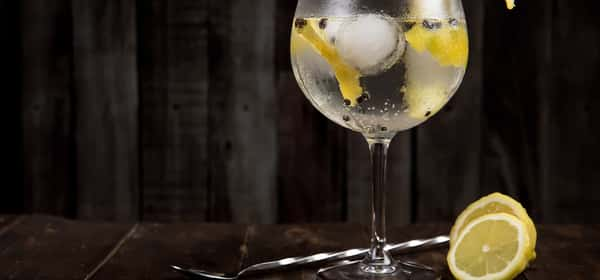
- Watch the mixers. Sugary sodas and juices in cocktails raise uric acid too, so a spirit with soda water beats one with cola.
For the complete strategy, our guide to how to lower uric acid puts alcohol alongside the other levers.
What to drink instead
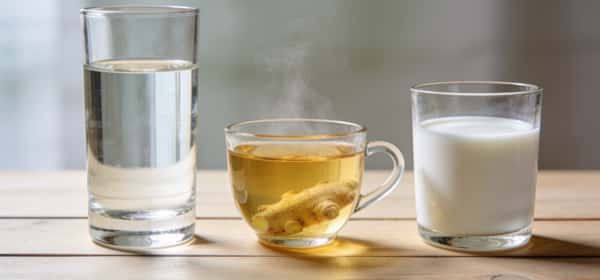
Cutting back doesn’t mean your only option is water (though water is genuinely great for gout, since it helps flush uric acid). Some enjoyable, gout-friendly alternatives:
- Sparkling water with a squeeze of lime or lemon — festive enough to replace a cocktail
- Unsweetened iced tea or coffee — coffee is actually associated with lower uric acid
- Non-alcoholic beer and wine — but check the label, since some non-alcoholic beers still contain the purines that make regular beer problematic
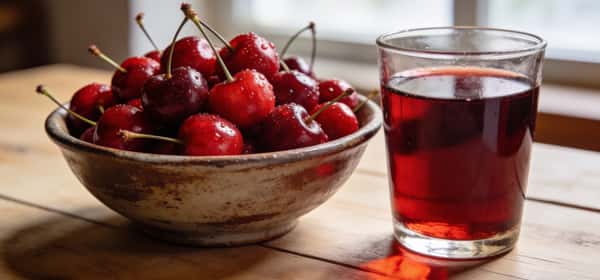
- Tart cherry juice spritzer — unsweetened tart cherry juice topped with soda water, combining a gout-friendly food with a drink that feels like a treat
The trick at social events is to have a glass of something in your hand that isn’t alcohol — it removes the pressure to keep drinking. And whatever you choose, keep sugary mixers and sodas out of it, since the fructose in them raises uric acid just like the alcohol does. Our guide to foods that lower uric acid has more gout-friendly choices.
Don’t forget the medical picture
An honest reminder: while cutting alcohol genuinely reduces your attack risk, it’s one piece of managing gout, not the whole solution. People with recurrent gout usually need urate-lowering medication to truly control the disease, and lifestyle changes like limiting alcohol work best alongside it. If you’re having repeated attacks, see your doctor — and never rely on cutting alcohol alone in place of prescribed treatment.
Suggested read: Best Diet for Gout: Guide and Meal Plan
The bottom line
Alcohol is one of gout’s most dependable triggers, raising uric acid and dehydrating you, and the science is clear that beer, wine, and liquor all increase your risk of an attack in a dose-dependent way — the old idea that wine is safe simply doesn’t hold up. Beer is the worst because it piles purines on top of the alcohol. There’s no perfectly safe amount, so if you have gout, drink less and less often, go alcohol-free during flares, and hydrate when you do drink. Combine that with the rest of a good gout plan and your doctor’s care, and you can keep your social life without letting it wreck your joints.
Neogi T, Chen C, Niu J, Chaisson C, Hunter DJ, Zhang Y. Alcohol quantity and type on risk of recurrent gout attacks: an internet-based case-crossover study. Am J Med. 2014;127(4):311-318. PubMed ↩︎ ↩︎ ↩︎
Choi HK, Atkinson K, Karlson EW, Willett W, Curhan G. Purine-rich foods, dairy and protein intake, and the risk of gout in men. N Engl J Med. 2004;350(11):1093-1103. PubMed ↩︎ ↩︎